Gogol in Hormuz: The collapse of US hegemonic fiction
MADRID - In Nikolai Gogol’s “The Government Inspector”, corrupt officials in a small Russian town panic at the arrival of a young man from St Petersburg. Ivan Khlestakov is a minor clerk, but the locals’ fear of their own embezzlement elevates him to an imperial auditor. His authority derives not from the tsar, but from his hosts’ paranoia. When the mask slips, only the ridicule of the deceived remains.
Today, the US national security bureaucracy operates under this exact psychology. Washington demands Iran accept security guarantees for temporary sanctions waivers, knowing its own Congress can revoke them at the slightest tremor. When Tehran refuses to validate the fiction, the Trump administration responds with the theatricality of a cornered bureaucrat, threatening from Truth Social to plunge into an abyss it dares not cross.
Trump’s recent proclamation that the memorandum of understanding with Iran is ‘dead’, alongside threats of a renewed blockade, is no exercise in strength. From Tehran, this reads as the frustration of a hegemon exhausting its options for conventional coercion. Recent military exchanges acted as a brutal reckoning for Washington, tracing the physical limits of its power. The memorandum’s announced death is the direct result of Washington’s systematic sabotage. The text offered a logical sequence for de-escalation: Iran would regulate Hormuz traffic, the US would lift the blockade, Tehran would access its funds, and threats would cease. But Washington treated it not as a binding framework, but as a tactical pause to preserve its coercive advantage.
From the Iranian perspective, the violation was immediate. The first clause, demanding an end to the war in Lebanon, was ignored. Asset releases were stinted; threats continued, with Trump even suggesting the kidnapping of Iranian negotiators. The final blow came in July, when the White House revoked oil exemptions just as Tehran consolidated its maritime route. This reveals the inherent violence of US diplomacy. The true trap lay in the legal architecture of the empire. Much of the sanctions regime is shielded by congressional legislation like CAATSA. Presidents can only offer renewable waivers. After the 2015 nuclear deal, Iranian planners drew a definitive lesson: temporary economic relief neither rebuilds a country nor guarantees security. Washington demands Iran translate its sovereignty into the language of liberal internationalism, while ignoring the sequential logic of its own agreements. Tehran knows the White House’s cheques are counterfeit.
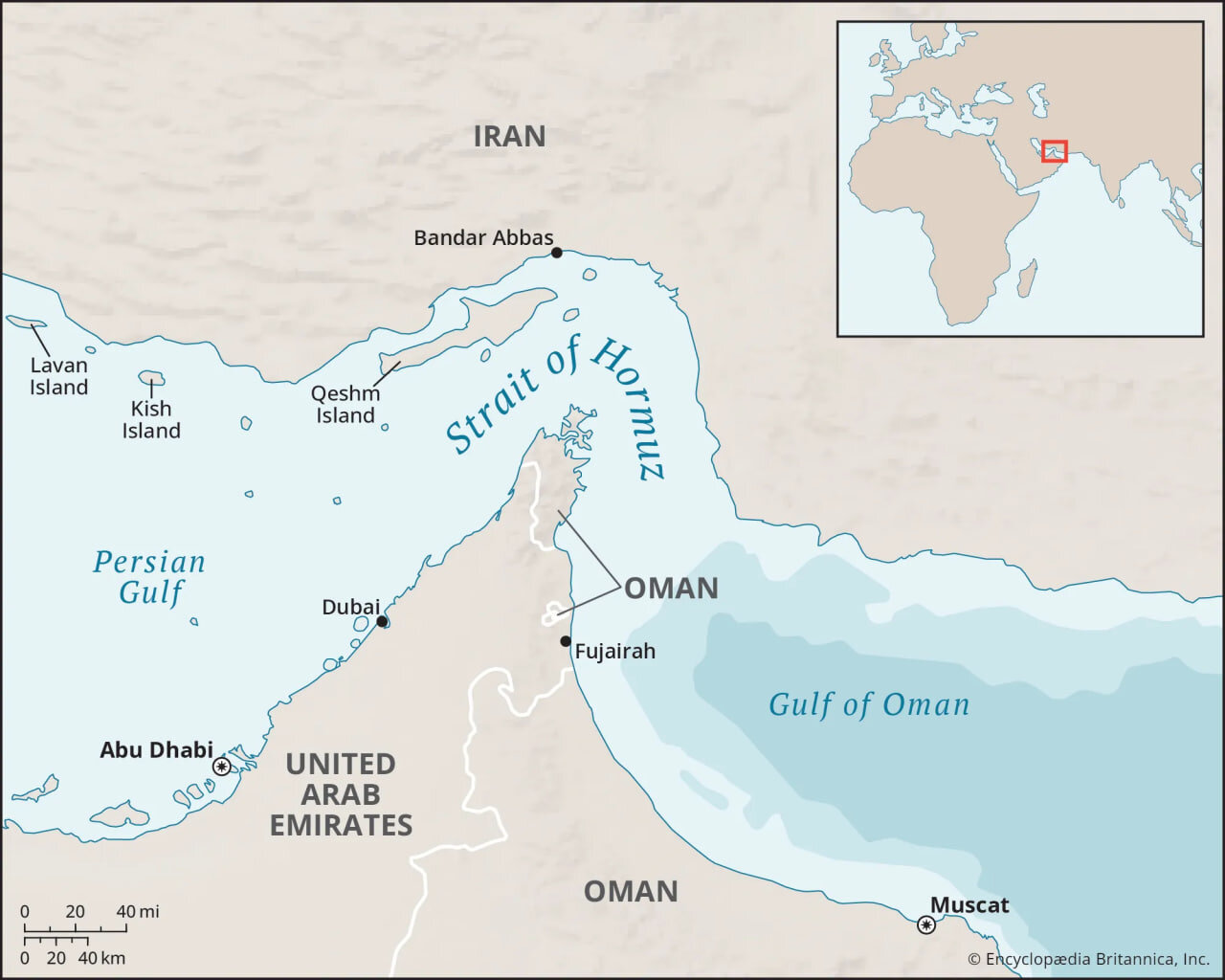
It is in this dead end that the Strait of Hormuz has ceased to be a mere military chokepoint, becoming the axis of Iranian sovereignty. Trading the nuclear program or regional alliances for ephemeral sanctions relief was an unacceptable asymmetry. By forcing commercial traffic into a designated corridor and establishing a joint administration with Oman to collect transit tariffs, Iran seeks a profound shift in Persian Gulf management. Far from seeking total closure—which would trigger a casus belli—Tehran is transforming a maritime highway, historically patrolled by the US Fifth Fleet, into a sovereign customs house. This manoeuvre challenges the Pentagon’s interpretation of the law of the sea. Washington invokes ‘transit passage’ to justify its aircraft carriers, ignoring that the strait’s geography makes coastal sovereignty claims absolute. Tehran is not ‘closing’ the strait; it is bureaucratizing its sovereignty, forcing global shippers to choose between the physical security of the Iranian coast and the legal fiction of the Fifth Fleet.
For decades, ‘freedom of navigation’ in the Persian Gulf functioned as a covert subsidy to Western economies, guaranteeing hydrocarbon flows at zero cost to hegemonic powers. By demanding that traffic submit to its designated corridor, Iran is collecting the historical bill for that externality. If the US Congress wants to toughen sanctions, it must foot the bill. Coercion is no longer free. This conversion of geography into rent extraction is what truly disturbs Pentagon planners. US strategic petroleum reserves are practically depleted, and global inventories remain tight. Military planners know that escorting every tanker through the Ormuz funnel requires an unsustainable logistical deployment against the Revolutionary Guards’ swarm boats. Air punishment can destroy infrastructure, but it cannot erase coastal topography or neutralize a state that has integrated the assimilation of damage into its survival doctrine.
The Islamic Republic possesses a political cosmology where resistance to imperial hegemony is an ontological imperative. The memory of the 1953 coup and the unilateral exit from the JCPOA remains alive as a reminder of Washington’s broken promises. Subduing a state that accepts tactical damage as the price of its continuity requires a ground invasion that no US president will order. The supposed death of the memorandum is the collapse of an illusion. As long as Washington inhabits the fiction of its own hegemony, refusing to accept that it can no longer impose a unilateral diktat, no agreement will be possible. The cornered bureaucrat continues to wave his papers and threaten the abyss, but in the Persian Gulf, legal fiction has crashed into matter. Until the empire accepts its defeat, the strait will remain where reality demands payment of its debts.
Leave a Comment